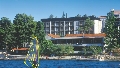

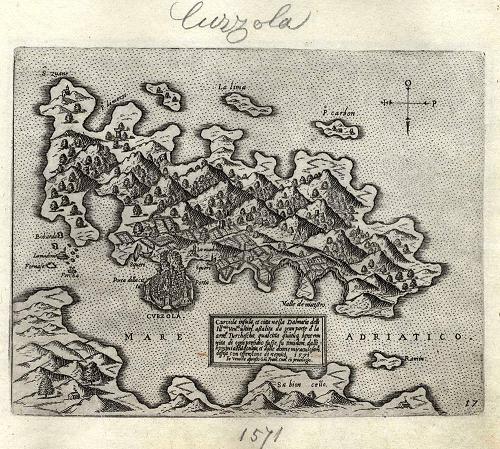


Although archaeological finds show that Korcula island has been inhabitated since the Paleolithic age, the town of Korcula was first mentioned in the 10th century. The oldest architectural remains, fragments with interlacing ornamentation, date exactly from that time.
After the Greeks, Illyrians and Romans, in the 9th century Croats have arrived and remained on the island. Through the centuries, Korcula changed many rulers - Roman, Byzantine, Austrian - but the Venetian rule has left the most significant impact on its cultural and architectural development. Most of historic monuments date back to that time, including Cathedral of St. Marc, the City museum and the birth house of the famous explorer and sailor, Marco Polo.
Beside the numerous architectural monuments, Korcula boasts a valuable juridical monument, the Statute of the town and island of Korcula, from 1214, which regulated rights and obligations of citizens of this Medieval town.
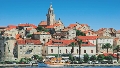
The old town was built on a small peninsula protruding toward Peljesac Strait. Specificity of the town is, for sure, a construction of its core according to a strict urban plan.
Surrounded by the stone walls and towers, city streets extand in a specific fishbone pattern.
Korcula citizens were well-known in the Medieval world for shipbuilding and stone masonry. Renowned architects of Korcula have left mark in the town, in surrounding towns and Dubrovnik.


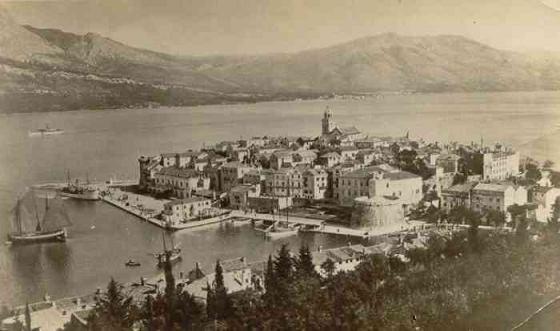


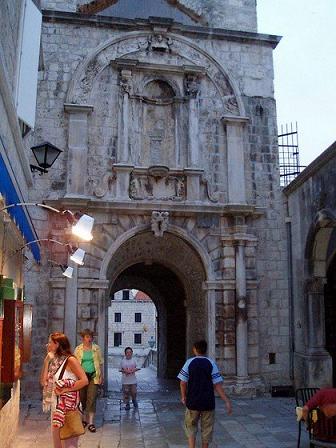
City walls - The old town's core was built as a fortification complex. Take a walk along the walls and see charming towers left from the 14th and 15th centuries - Barbarigo and Tiepolo from the north and Balbi, Cappelo and Revelin from the south side.
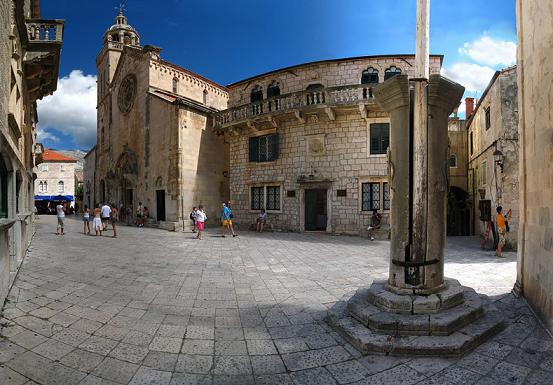
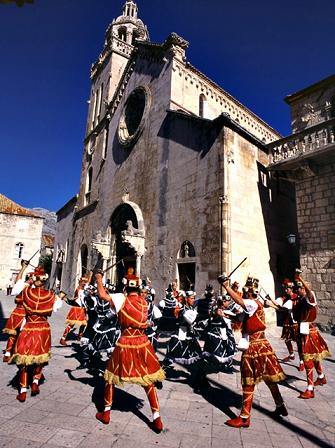
Cathedral of St. Marc - Built in the very heart of the town (14th - 16th century), the church represents the most beautiful Gothic - Renaissance monument of the old town. The famous Korcula's architect, Marko Andrijic, built its belfry, and ciborium above the main altar as well.
Marco Polo's Birth House - It is known that the famous world-traveller was born in Korcula. The house of Marco Polo is placed in the centre of the town, near St. Marc's Cathedral.
Korcula City Museum - Explore the rich history of Korcula visiting the representative Gabrielis Palace, which houses the City Museum.